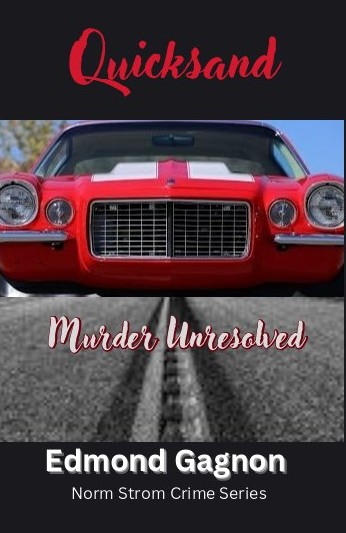
My latest Norm Strom Crime novel has just been released – available in eBook on AmazonNOW. The release in paperback there and on your other favorite book site is coming soon.
Quicksand is a fictional story of an unsolved local murder that occurred in a quiet lakefront village where Norm Strom resided before moving back to Windsor, Ontario. Annie Gladstone is run down in broad daylight by a hit and run driver who is never identified or arrested.
One of Strom’s co-workers, a fellow cop, was dating Annie and is questioned about the incident. Her estranged ex-husband quickly becomes a person of interest and later the main suspect. An arrest is made several years later and the Gladstone family relives the entire event in court.
The case is still open and the murder remains unresolved to this day.
Newcomers and frequent visitors to Melaque, Mexico, are always searching for or inquiring about where to dine in town. Cathryn and I are foodies so when we visit restaurants we look for good food and service, hoping those things are reflected in the price. Some folks think that cheap food or large amounts of it is great but we expect more. We often dine with friends and try to offer honest reviews. Links are included if one can be found.
El Dorado (Club Nautico) – usually our first stop after arrival since our fridge and cupboards are empty. It’s the first place east of the earthquake hotel, offering one of the best views on the beach, they have a varied menu. My favorite is a platter-sized slab of chicken parm with a loaded baked potato and veggies. Cathryn enjoys the Papillon (Dorado). We’ve tried other dishes that have been hit and miss, depending on who’s cooking that day. The margaritas aren’t nearly as good as they used to be and some staff speak decent English. This came in handy when the waiter thought we were only sharing a baked potato.
La Chinita – formerly in a terrible location on the highway, this is the best Authentic Chinese food in town. But if sweet & sour chicken balls are your thing, they have them too. Great spring and egg rolls and homemade wonton soup. The new location is in Villa Obregon where Vanilla Pimienta was and they’ve recently added a rooftop bar with pool and pingpong tables. We were six on our last visit and everyone loved their meals. We’ve also had them deliver to a party at our casa – food was hot and plentiful.
Patas – It’s small and the menu is limited but everything listed is awesome. Their burgers are one of the best in town and their ‘Denver Burrito’ is man-sized and stuffed with beef or chicken. Even their nachos are top notch, probably because they make their own chips. There’s something extra-special about warm tortilla chips and fresh guacamole. We’ve never had a bad meal at Pata’s. Cathryn can’t get enough of their cilantro margaritas.
Quetzal de Laura – Friends have given us mixed dinner reviews but swear by their crepes. For Cathryn and I it’s the best breakfast place in town, with great omelets and both gringo or Mexican dishes. Breakfast usually comes with a fresh, warm biscuit, small salad and home fries. Prices are about half what we pay at home. They use cream cheese in their omelets, a savory treat in my opinion. Their breakfast meals have been consistently good for years.
Kyoto – A Japanese restaurant that used to be downtown, a new Melaque experience for us. Toted as a Sushi restaurant, it’s more of an Asian fusion menu, with sushi, stir-frys and soups. They accept reservations there but service is exceptionally slow, even by Melaque standards. Out of our party of six, only one thought his sushi roll was lousy. Cathryn and I liked our California roll and egg rolls. We didn’t care for the dumplings – we chose the fried ones. Quiet entertainment allowed us to carry on conversation. Washrooms were broken.
El Patio – My second favorite breakfast place – right on the main drag in town. I prefer the sidewalk tables where I can watch the world go by. Only open for breakfast and lunch, they have a menu that attracts gringos and nationals alike. I’ve sampled their various omelettes and was pleasantly surprised by their authentic clubhouse sandwich. From the sidewalk, you can watch your meal being cooked. Service is quick and prices are very reasonable.
La Oficina – We didn’t make it here last year but recently went for what many call the best burger in town. Cathryn and I split one and have to admit it’s one of the top three, at least. There’s no question that their Caesar salad is top notch and our friend gave a thumbs up to his chicken burger. We’ve also taken their smoked marlin and marlin pate home, returning for more. Service is amazingly quick for the amount of food the kitchen puts out. Prices are in line with everyone else. Lots of tv’s for sporting events.
Rusty Compass– A new player in town, it’s more of a beach bar than restaurant, owned and managed by Canadians. The beer is cold and cheap and pub grub is served from a food truck. We had a shrimp cocktail that blew us away. Our friend enjoyed the taquitos and happy faces around us said the burgers were good too. No plastic cups there, wine is served in stainless steel vessels. It’s the new hot spot in town with daily entertainment.
The Frog – Our first visit back in a few years was a pleasant experience. Next to the old Simona’s in Barra, the chicken cordon bleu is the best I’ve had around here. The cream of broccoli soup was excellent and our friend thoroughly enjoyed his Czechoslovakian pasta, saying it was like chicken cacciatore. Frequent patrons at the next table raved about the fish dishes offered there. Other friends have also bragged about their breakfast.
Tacos Pedros – One of friend’s favorites on Taco row, Cathryn and I don’t see the attraction. Craving tacos, we gave it another chance. A few doors down from the main square, menu choices are listed on the wall, and limited – basically tacos or quesadillas (tacos with cheese). My pastor was edible but Cathryn’s chicken looked exactly like my pork, both virtually flavourless unless you consider one of the hot sauces, flavour. I pigged out on their radishes and beans. No sour cream or even guac available. Sorry, I’m a Taco Bell kind of guy.
Moon– Top Floor of Casa Leon – Hands down, the best view in Melaque. As much as we try to like this place, the food has really let us down. The wait staff is excellent but something’s amiss in the kitchen. On our recent visit, only one of our group of eight was happy with his steak. His calamari was overcooked and bland. Ribeye and New York’s were paper thin and fatty or grisly. It appeared they were boiled or steamed before being grilled and Cathryn’s was way undercooked. Salads were very good, as was the lemon cheesecake. Many other friends rave about the two-for-one rib or burger nights if that’s your thing. We feel prices are high for the quality of food we received. They now offer a Sunday brunch with seems to be getting positive reviews.
We’ve also eaten at the Sea Master in Barra, Seriana Gordita at Coco Beach, Pedro’s in La Manzanilla, and Pata Salada in Manzanilla, all with decent offerings, but I’ve kept this list to Melaque.
Please keep in mind that opinions expressed are our own and from our dining friends. You might have a completely different experience since menus and staff change frequently. Be brave, be adventurous. Happy dining!
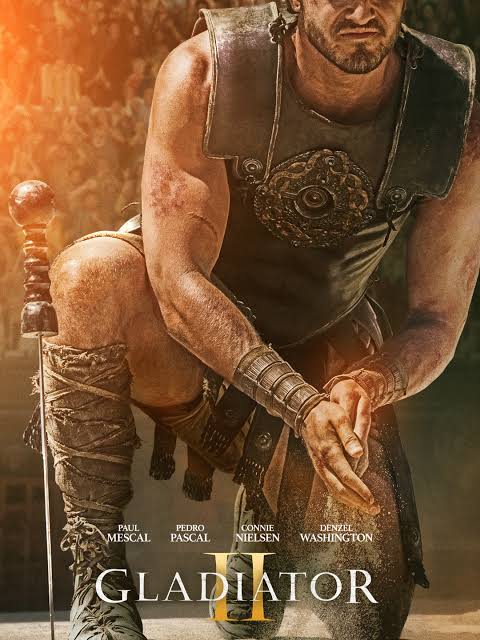
Paul Mescal ain’t no Russel Crowe, but then again he is only the son of Maximus. He follows the same path in life…from soldier to slave to Gladiator. I’ve given away the obvious as the plot slowly reveals the plight of poor Lucius (son of Lucilla) after the death of his uncle, the Emperor, at the hand of Maximus in a final showdown in the colosseum.
CGI and special effects give us a good idea of what Rome looked like in it’s heyday and the story lets us know exactly how politically corrupt the onetime world power really was. As a tourist who’s visited Rome and a few other colosseum’s in Europe thinking they are magical places, witnessing what really went on there is an eye-opener.
While visiting the Roman Colosseum, I was told of how they channeled river water in to flood the floor and re-create mock naval battles. One scene in the movie does exactly that and it’s quite amazing to witness the ingenuity of the Roman people two thousand years ago.
Connie Nielsen returns as Lucilla and a good eye will catch and remember one of the Senate members who starred in the original. Denzel Washington adds a few plot twists while you try to figure out if he’s a good or bad guy.
Cathryn opted out of Gladiator II thinking it was too gory for her. She was right. I saw it instead with a buddy and we both thought the movie was very good. We gave it a 9 out of 10.
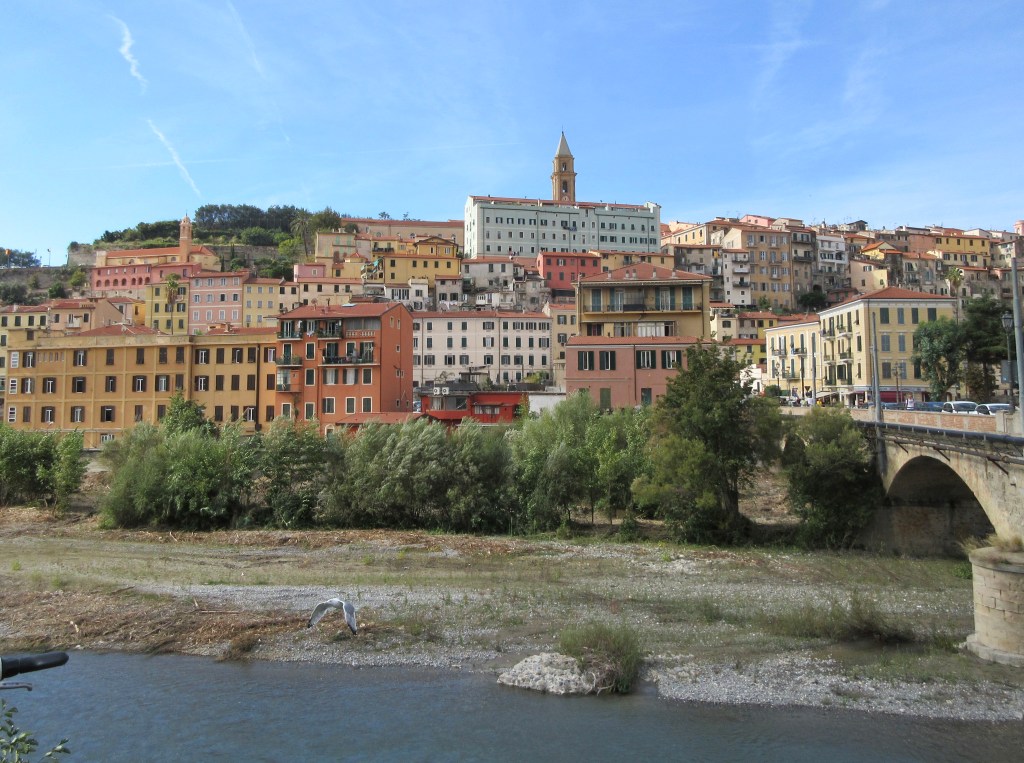
I’ve always been drawn to small medieval villages or walled-in historic hilltop towns when I travel. Admittedly, I was skeptical when Cathryn suggested Ventimiglia as one of our destinations for our 2024 trip to Italy. She had seen the town years prior during a mother-daughter trip but hadn’t visited the ‘old town’ which lay below the mountain-top resort they stayed at.
Looking for our 3rd base of operations after Lake Garda and Venice, I found us an apartment smack in the middle of the historic medieval town of Ventimiglia. With train foul-ups it was a full day ride to the last stop on our Italian adventure. We purposely worked our way south from mid-September in search of decent Autumn weather and a perch overlooking the Mediterranean Sea.
Although dusk was upon us on arrival, we were immediately in awe when the taxi dropped us in the piazza in front of a beautiful 800 year old stone church. Our apartment was only two doors away and although the stairs up to it were brutal with luggage in tow, we were blown away by the view. We had two balconies overlooking the main pedestrian street and a rooftop terrace offering a panorama of the church belltower and azure blue sea.
Too hungry from our long journey to bother unpacking, we headed back down the stairs and quickly surveyed our new neighborhood for somewhere to eat. There was a wine bar across the street and a cafe directly below our apartment but neither offered a full meal. We took a chance on a little restaurant right next to the church. Serving unique traditional dishes, it turned out to be our favorite place in town.
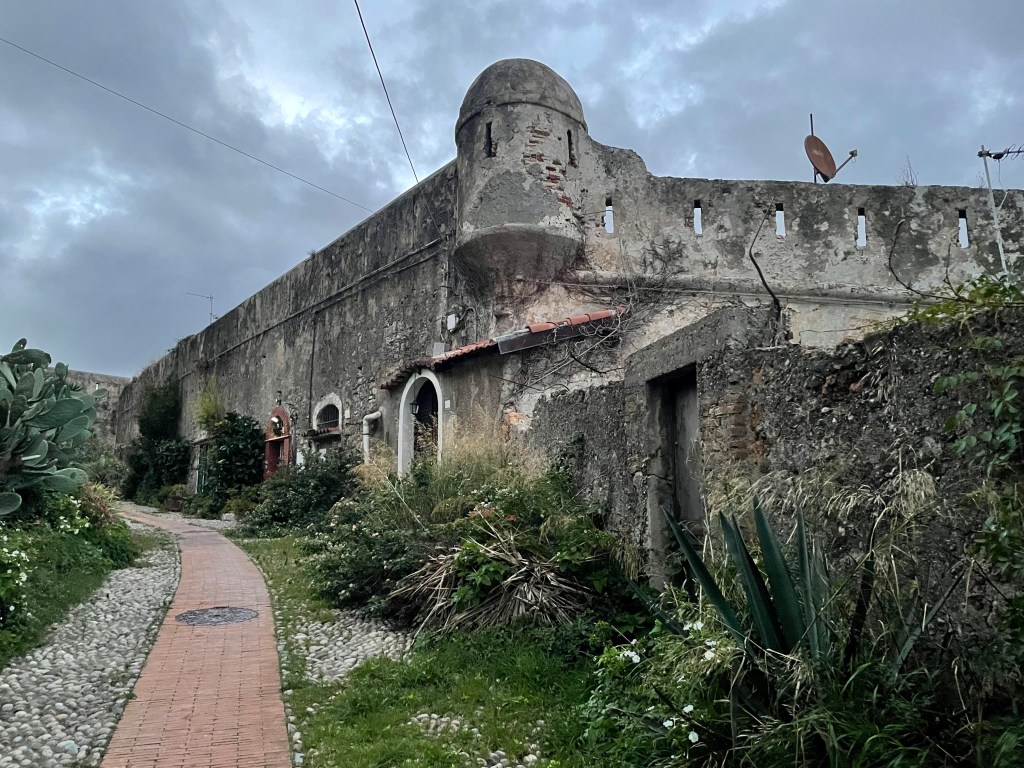
The streetlights were on when we left the restaurant, showcasing the quaint little medieval town that would be our home for the next twelve days. Ventimiglia has a population of 20k souls but I’d guess the old town has about 2k at most. The residents live mostly in 3 and 4 story buildings ranging in age from 200 to 600 years old, built right into the rock with winding and narrow streets or alleys, some barely wide enough to walk two abreast.
The main road up the mountain and into town stops at our doorstep, with no vehicular traffic allowed beyond that. Even Amazon has to deliver on foot. Cathryn and I has a blast exploring the old town, choosing tunnels and narrow passageways just to see where they led. The town’s ancient walls are still intact, with arched gates on three sides allowing entry. Some homes are actually built right into the wall.
Our balconies allowed us to observe everyday life in the medieval village. Like everywhere else in the world, many adults were on their cellphones. But children actually played – soccer or tag in the street or church piazza, some yelling back and forth – I think just to hear their own voices echoing off the stone buildings. There is no grass anywhere in town, but succulents do well in this climate and many homes have potted plants on their stoops or window sills.
It’s mostly men who gather at the cafe and in the street, drinking cappuccino or beer depending on time of day. Women’s presence is known by the aroma of baked goods or prepared meals wafting out of neighborhood windows. We only had to poke our noses out the balcony door to know it was dinner time. And we’ve had some awesome food, sticking to mostly traditional dishes to fully appreciate the local culture.
Cathryn and I don’t do cappuccino and croissants for breakfast every day but I’d be lying if I said we didn’t try it. With a local market only a few doors down, we ate at least half our meals in. To my dismay, bacon and eggs or even omelettes are not a breakfast staple in Italy. But fresh bread, pizza, pasta and seafood is. We had some amazing pasta dishes, even more amazing squid and octopus in warm and cold dishes. And it ain’t Windsor pizza but still very good.
Ventimiglia is only 20 minutes from the French border so it makes a good base to explore from. Nice and Monaco are within an hour by train. There are also other great Italian cities and towns close by to visit. We used an Italian rail pass but if you want to venture into France go for the 2 country or global Eurail pass. The area is easily accessible by car with easier access to small towns since bus service can be limited.
I will do my best to describe the City of Venice and what’s it’s like, but I believe it is one place in the world you should experience yourself to truly understand and enjoy just how unique it really is. Cathryn and I have both been there before but we loved it enough to visit once again for her 60th birthday year. Our plan for this trip was to skip the heavily trafficked touristy sites and take in the outer islands of Torcino, Burano and Murano.
If we stay more than one night in any location I try to book something with a kitchen, such as an Airbnb or something on VRBO so my personal chef can prepare some of our meals in. This worked well for us since breakfasts in Italy consist of pastries and coffee, one of which is bad for my waistline and the other something I’ve never consumed. Lunches were usually some type of ham sandwich while we were out exploring.
Although my chef prepared some awesome pasta dinners in, we ate many of our dinners out. Pasta and pizza are available everywhere and usually the cheaper way to go. Seafood dinners were also easy to find but many were pricey for us since 1 Euro is equal to about $1.40 Canadian. Thankfully, food tax is virtually non-existent and tipping is not customary in Italy. But many restaurants charge a 2-3 Euro service fee to make up the difference.
Venice. Some call it the floating city but it’s actually built on reclaimed land in a lagoon, on thousands and thousands of wood pilings. It explains the lack of trees. Experts blamed those same foundations as the reason for Venice’s sinking but it’s now been discovered they’ve drained underground aquifers for centuries to get drinking water, causing the city to sink. Higher sea levels and advancing tides also invade the city, meaning Venice’s life expectancy is limited.
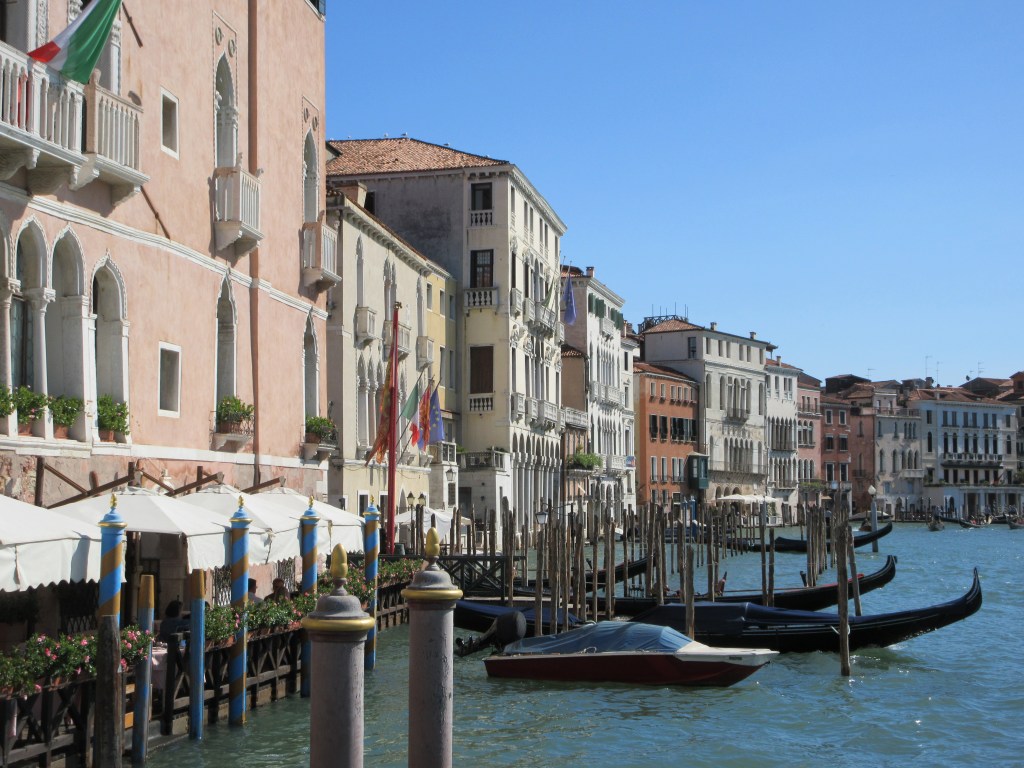
Venice. You won’t experience such a unique city anywhere else in the world. Once a place where people in the 5th century fled to avoid Barbarian conquerors, it later became a major trading hub for fish and salt and by the 9th century it had become a major maritime empire. Arriving in Venice by the Grand Canal, which snakes it’s way through the center of the city, you can still witness the magnificent palaces and buildings showcasing Venetian prosperity.
Nowadays, Venice makes it’s money from mass tourism. It’s gotten so bad that the city had forbidden large cruise ships and they charge a visitation/tourist tax. But it’s still a really cool place to visit, especially if you like history, ancient Byzantine and Baroque architecture, palaces, churches, canals, and Italian food.
Try to imagine a place where there are no front lawns, only water. No cars or trucks. You get everywhere by foot or boat. Even mass transportation is by waterbus, called vaporettos. Those with deep pockets can hire beautifully varnished watercraft, and some locals own their own boats to get around. Everything in Venice moves by water and the canals – people, food, and garbage.
The city is known for it’s gondolas, a hand-crafted canoe of sorts that has become a must-do thing for visiting tourists. The boats costs thousands of dollars to build and gondoliers go through a 4 year training course to master their trade. Some serenade their fares while rowing and weaving their way through various canals. Our apartment overlooked one canal and we watched wide-eyed tourists and even wedding parties go by. It was way better than the cars and trucks that roared by daily at our last place.
Our plan to visit the outer islands made for a perfect visit. We took the vaporetto to Torcello first, a little over an hour away but well worth the trip. Leaving at a popular time of day, our boat was quite packed until the last leg. The island is where it all began, where the Venetians started to build in the lagoon. The cathedral was built in the 7th century and is one of the oldest churches is Italy. Exploring the island left me puzzled, trying to figure out how 20,000 people once lived there. Now there are only 12.
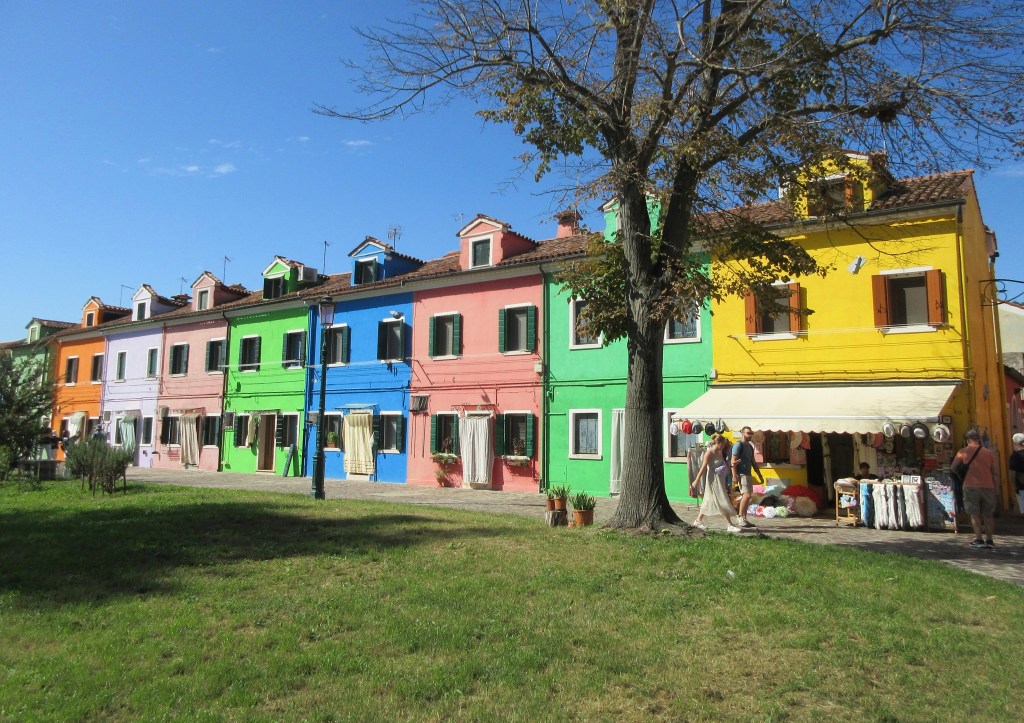
Burano was our next island stop and it completely blew us away. It is easily the most colourful place we’ve ever visited – houses, shops and buildings are all stuccoed or painted in various pastel colours, making neighborhoods look like rows of saltwater taffy. Like the main Venice island, Burano also has canals and plenty of pedestrian only streets to explore. For Cathryn and I, it is our favorite Venetian island.
We visited the island of Murano too but were hard-pressed to be wowed after seeing Burano. But if you’re into hand-crafted Venetian glassware, Murano is the place to go. There are several glass blowing factories to visit and hundreds of stores selling everything from fancy chandeliers to miniature glass ballerinas. The glassware is impressive but the canals and buildings are similar in size and construction to those scattered across the City of Venice.
I conclusion, having been to Venice myself on two previous occasions I wasn’t too excited to see it again. But just as it was on my very first visit, the city grows on you. The heavily-trafficked touristy sites are definitely worth seeing for the first time. But the back streets (like the Jewish Ghetto) take you back in time, where neighbours gathered in piazzas or courtyards. Children without electronic devices, boys playing football and girls skipping rope. Men gathered to drink coffee or beer and women working in the kitchen sending wonderful aromas out the window to passerby.
Italy is a large country with several beautiful regions to explore. Cathryn and I have been mostly exploring the northern regions and more specifically on the first part of this trip, Lake Garda. It’s the largest of Italy’s lakes, situated in the north and fed by some of the meltwater from the Swiss and Italian Alps. We’d covered much of Lake Como on our last Italian visit but this time we planned to explore Garda and it’s surrounding medieval towns.
We chose the town of Garda as a base, situated on the eastern shore of the lower half of the lake, with plenty of other towns close enough to explore with simple day trips by ferry or bus. Garda Town was the perfect size for us, easily walkable and fun to explore with cobbled pedestrian-only streets, some of which linked piazzas with tunnels under ancient buildings.
Garda has plenty of restaurants serving all sorts of foods, mostly specializing in seafood, pasta and pizza. Funny, no matter what kind of a menu they offer, every single eatery serves pizza. That includes focaccia and bruschetta-sized pizza so budget-minded travellers can afford reasonably priced meals. Most costs were similarly priced to home, more compatible to the American dollar since it is almost at par with the Euro.
Cathyn tells me that prices for clothes and genuine Italian leather goods are way more reasonable than in major tourist centers like Rome or Naples or the Amalfi coast. Ferry tickets between towns on the lake got pricey for longer distances, like the Town of Limone which is at the top of the lake and two hours away. The train stops at Peschiera, on the bottom of the lake so you have to rely on lake ferries or local buses. Taxis and even Uber are very expensive.
There are plenty of walking or hiking paths in the area, with some other towns easily reached on foot. We walked along the lake to Bardolino and then to the cool little town of San Vigilio, where we witnessed a Calvin Klein photoshoot. Both were easy lakeside walks, reachable in about 45 minutes. We also took the ferry to Lazise, Torri del Benaco and Sirmione, all within an hour or so boat ride. Because of heavy road traffic around the lake, the ferries are much more punctual than buses.
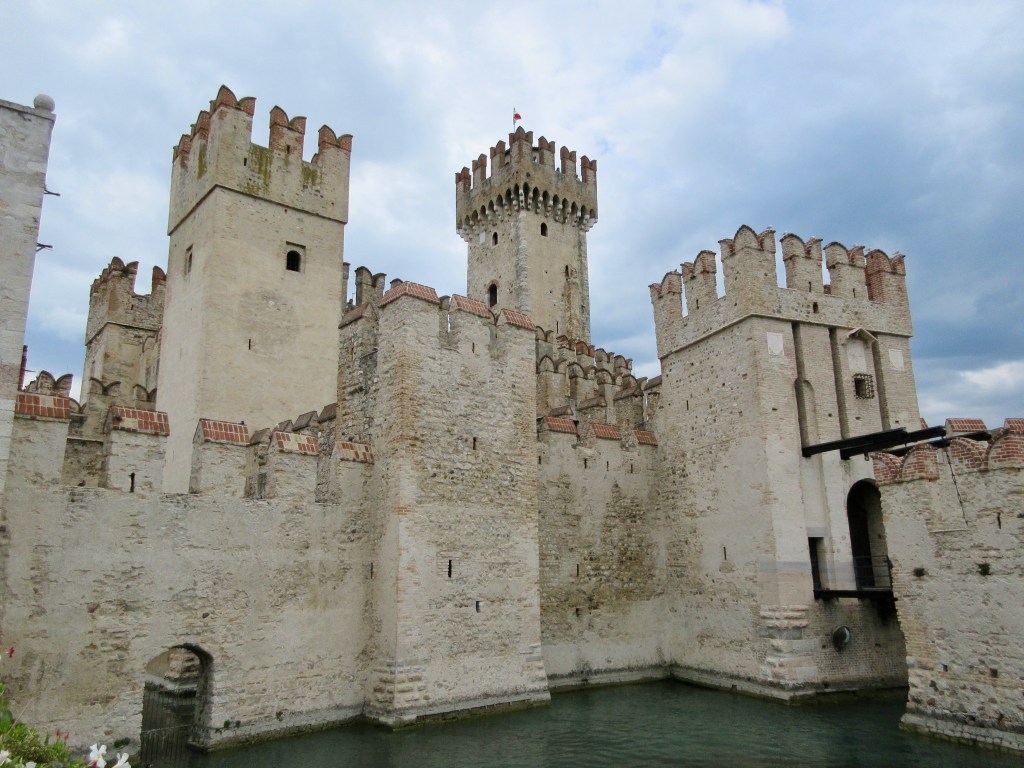
One might think that all medieval towns are the same – you’ve seen one castle town – you’ve seen them all, but we found it wasn’t so. Each town was unique in it’s own way, some walled in by an old fortress and some showcasing their castle as a historic old town centerpiece. Crowds were heavier than we expected for the so-called shoulder season, with getting around much easier early or late in the day. I can’t even imagine how crazy it would be here in summer.
People all over the world visit Italy and Lake Garda, but we found this is the time of year when 80% of tourists are German. And oddly enough, those we encountered were the they most arrogant and rude people we’ve ever met. More so than any Germans we know or have met in Germany. They blatantly cut queues for the ferry or bus, sometimes shoving their way through, and they thought nothing of smoking at a table 10 inches away while eating meals. Never did they offer an excuse me or hello or even a smile.
We had a mixed bag of weather, with a few more clouds and rain that normal, but we managed and only had to don a raincoat or umbrella a couple times. It was sporadic – we had a picture perfect day in Torri del Benaco, while friends we met got rained on all day in another town only 10 miles away. Temperatures were comfortable, depending on sun or cloud, anywhere between 15 to 25 degrees day or night.
If you like lakeside retreats, mountain views, historic small towns with medieval sites all within a couple hours of each other, put Lake Garda on your bucket list. We also visited Verona, only about an hour from Garda Town, but that’s another story.
This novel is a slow-starter and a bit of a yawner…taking over 300 pages before Detective Milos Sturgis and Dr. Alex Delaware latch on to what seems like a viable lead. As usual with this pair, there is way to much speculating and theorizing between them while trying to piece together murder details and possible suspects. I’m also not a fan of excessive fluff…long-winded descriptions of every person and place in the story. But the plot is a decent one that starts with one gruesome murder, then two, and what later becomes a trail of bodies left behind by a sadistic serial killer. Not Kellerman’s best in my opinion, Monster is worth the read but I wouldn’t rush to put in on the top of your reading list.
I like Jack Higgins writing style and enjoyed this story but have tired of characters like Sean Dillon, the spy or ex-soldier of some type with all the special skills necessary to save the world. At least this tale is of a different sort, tying past with present, while trying to locate a lost artifact that could change the political fate of at least one country, let alone the financial interests of other countries and criminal enterprises as well. There’s enough action to keep readers turning pages, and although I felt they were predictable, a few plot twists made the story more interesting.
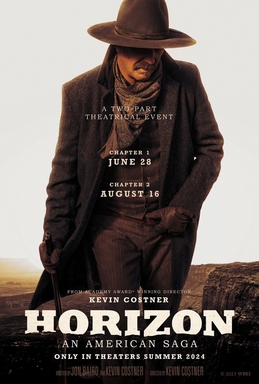
Being July 4th, America’s Independence Day, I thought it appropriate to post my review of Kevin Costner’s latest movie, Horizon – An American Saga. Yellowstone series fans have been wondering why Costner would leave such a lucrative full-time job leading the western television series, and now they have an answer.
Falling back on his high-risk gamble with Dances With Wolves, where he wrote, produced, directed and starred in an epic kind of true-to-life American western movie, Costner has put all his time and money into the Horizon series. Yes, I say series because the movie is done in four parts – probably becoming a ten part mini series once all four installments have left the big screen.
Warning: Horizon is filled with the kind of violence that has never really been portrayed in the typical westerns Hollywood has pumped out in the past. It was so violent that my wife chose to leave the theater less than an hour into the three hour and ten minute movie. If indigenous people of the American west slaughtering white settlers, and mercenary white men killing and scalping native women and children doesn’t bother you, then by all means see the movie.
Horizon is a collection of stories within the story, showcasing the lives of folk from all walks of life who travel to or live in the wild west for one reason or another. Costner’s character doesn’t actually appear until about an hour into the movie. And after trying to digest his character for the three plus hours of film, I was left trying to figure out his goal and real life ambition.
From cowboy and Indian skirmishes, to wagon trains, railway expansions, and promises of free land to those who can make the dangerous journey out west, Horizon gives you an unbiased look into the brutal birth of the American west, how it was invaded and eventually settled. And all the while, the United States is in the middle of it’s civil war, pitting north against south.
I’ve always loved westerns, even those that might not be for the faint-hearted, like Dances With Wolves or Unforgiven. So, I enjoyed the story, cinematography, and action in Horizon. I give the film a 9 out of 10. Cathryn didn’t see enough to rate the movie. So, if you decide to see the flick yourself, load up on popcorn but don’t drink too much – unless you can hold your bladder for 3 hours.
Our go-to restaurant for the best coconut shrimp on the Costalegre, Palma negra Beach Restaurant is one you have to try in you’re in the Melaque/Barra area. Located on Coco Beach, on the far side of the Grand Bay Resort’s golf course, this hideaway beach restaurant is worth the trip (take the Isla de Navidad/Colimilla road off Hwy 80.
On this occasion we went with a group of ten and everyone ordered something different, mostly indulging in the Thai side of the menu. In our opinion, Maria has some of the best Thai dishes around…pad Thai and assorted curry dishes like mussels in coconut curry sauce and chicken in red curry. She also offers fresh-made appetizers such as spring rolls in rice paper with peanut sauce, guacamole, and of course coconut shrimp.
One of the group raved about the fish tacos and I enjoyed the bacon cheeseburger. Another had the Caesar salad with about a half pound of plump shrimp. Others enjoyed their curried dishes, soup and salads. They also serve a large variety of beverages and cocktails.
Palma negra is a family run business that now rents out a beach bungalow that includes breakfast. They also have a lazy river pool and direct beach access, with a nearby site for turtle releases. It’s best to call ahead or email for reservations since they sometimes have entertainment that draws large crowds, and they close one day a week.
Our group rated Palma negra Beach from 7 to 10 out of 10, with a least a handful of 10’s.












 Life Written and Reviewed