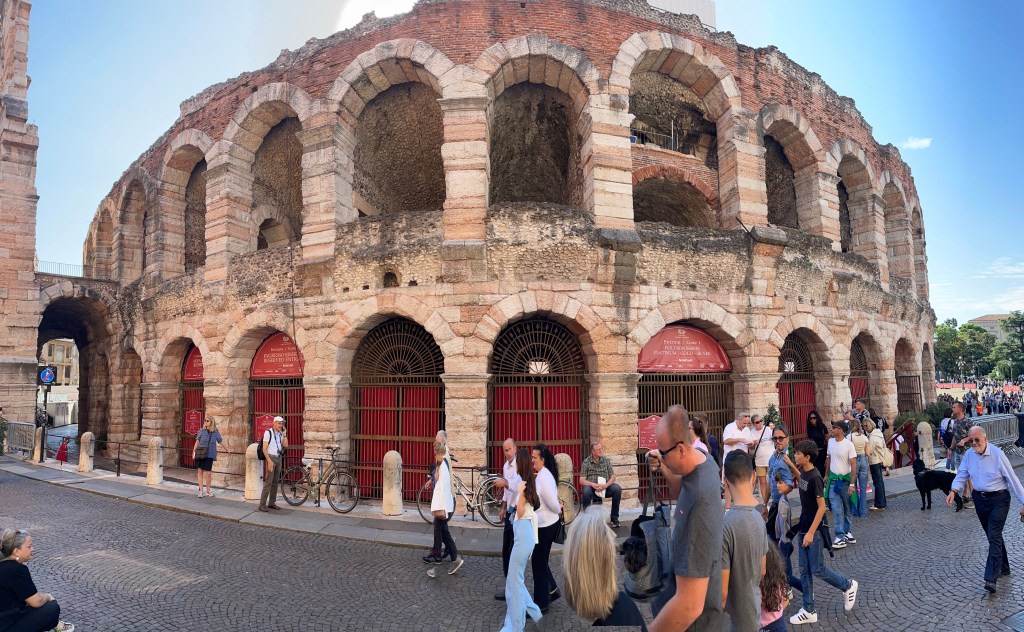

Garda – Italy’s Largest Lake

Italy is a large country with several beautiful regions to explore. Cathryn and I have been mostly exploring the northern regions and more specifically on the first part of this trip, Lake Garda. It’s the largest of Italy’s lakes, situated in the north and fed by some of the meltwater from the Swiss and Italian Alps. We’d covered much of Lake Como on our last Italian visit but this time we planned to explore Garda and it’s surrounding medieval towns.

We chose the town of Garda as a base, situated on the eastern shore of the lower half of the lake, with plenty of other towns close enough to explore with simple day trips by ferry or bus. Garda Town was the perfect size for us, easily walkable and fun to explore with cobbled pedestrian-only streets, some of which linked piazzas with tunnels under ancient buildings.

Garda has plenty of restaurants serving all sorts of foods, mostly specializing in seafood, pasta and pizza. Funny, no matter what kind of a menu they offer, every single eatery serves pizza. That includes focaccia and bruschetta-sized pizza so budget-minded travellers can afford reasonably priced meals. Most costs were similarly priced to home, more compatible to the American dollar since it is almost at par with the Euro.

Cathyn tells me that prices for clothes and genuine Italian leather goods are way more reasonable than in major tourist centers like Rome or Naples or the Amalfi coast. Ferry tickets between towns on the lake got pricey for longer distances, like the Town of Limone which is at the top of the lake and two hours away. The train stops at Peschiera, on the bottom of the lake so you have to rely on lake ferries or local buses. Taxis and even Uber are very expensive.

There are plenty of walking or hiking paths in the area, with some other towns easily reached on foot. We walked along the lake to Bardolino and then to the cool little town of San Vigilio, where we witnessed a Calvin Klein photoshoot. Both were easy lakeside walks, reachable in about 45 minutes. We also took the ferry to Lazise, Torri del Benaco and Sirmione, all within an hour or so boat ride. Because of heavy road traffic around the lake, the ferries are much more punctual than buses.

One might think that all medieval towns are the same – you’ve seen one castle town – you’ve seen them all, but we found it wasn’t so. Each town was unique in it’s own way, some walled in by an old fortress and some showcasing their castle as a historic old town centerpiece. Crowds were heavier than we expected for the so-called shoulder season, with getting around much easier early or late in the day. I can’t even imagine how crazy it would be here in summer.

People all over the world visit Italy and Lake Garda, but we found this is the time of year when 80% of tourists are German. And oddly enough, those we encountered were the they most arrogant and rude people we’ve ever met. More so than any Germans we know or have met in Germany. They blatantly cut queues for the ferry or bus, sometimes shoving their way through, and they thought nothing of smoking at a table 10 inches away while eating meals. Never did they offer an excuse me or hello or even a smile.

We had a mixed bag of weather, with a few more clouds and rain that normal, but we managed and only had to don a raincoat or umbrella a couple times. It was sporadic – we had a picture perfect day in Torri del Benaco, while friends we met got rained on all day in another town only 10 miles away. Temperatures were comfortable, depending on sun or cloud, anywhere between 15 to 25 degrees day or night.
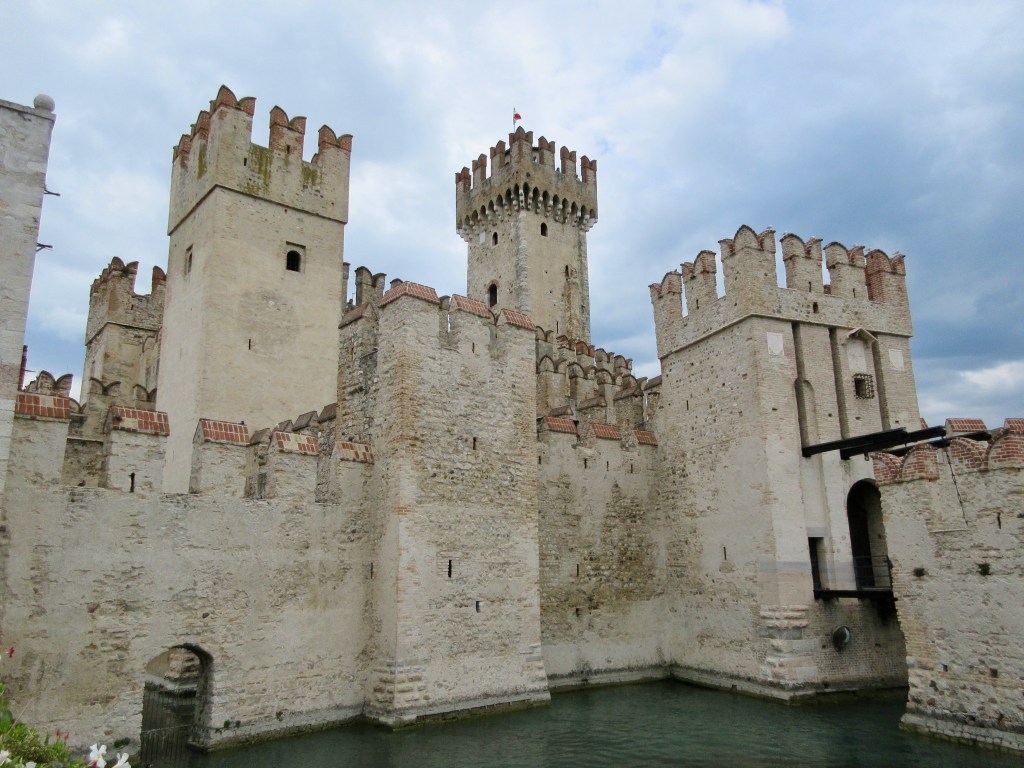
If you like lakeside retreats, mountain views, historic small towns with medieval sites all within a couple hours of each other, put Lake Garda on your bucket list. We also visited Verona, only about an hour from Garda Town, but that’s another story.

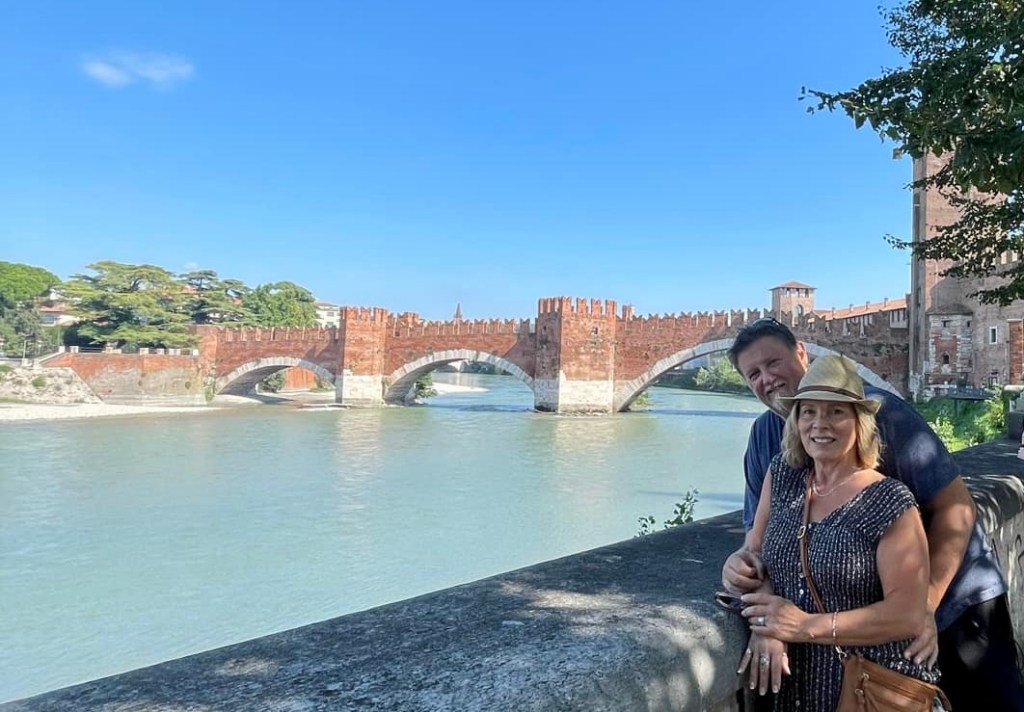
Mass Tourism – Us vs Them

Mass tourism has become a taxing and ugly thing for many countries, cities, and famous sites around the world. With the advent of the Internet, they say the world has become a smaller place. Add the ease of air travel and other modes of transportation along with human curiosity, and one can see why the masses have ventured out from their own backyards to seek out unique and fantastic places to visit.

Cathryn and I were ‘travellers’ long before we met each other. She was lucky enough to do several trips with her family. Mine was larger without the money for that kind of thing but my brother and I managed a trip to Florida with my mother and her boyfriend once we had a job and were able to pay our own way. After securing my career as a police officer, I used my pay cheque for a motorcycle trip back down to the sunshine state.

My wanderlust and thirst for travel continued with trips throughout Canada, the U.S., Europe, Mexico and the Caribbean Islands. I did one cruise because of the unique ports of call but didn’t like scheduled meals and events on board, as well as the process of trying to get hundreds of people on and off the ship every time it docked. We relied on travel agents and ‘packaged’ tours back then, with our absence from work limited by allotted vacation time.

Retirement rewarded me with unlimited time to travel. One or two-week vacations became a month or more, allowing me to venture further abroad for longer. Changing with age and the times, I went from backpacking around Europe to flashpacking (backpack on wheels) in Southeast Asia and South America. Solo motorcycle trips up, down, and across North America evolved into trips for two, with Cathryn joining me on the Harley.

I’d found my life partner, with similar tastes in music, food, travel and life itself. Once Cathryn retired, the world was ours to discover. And at that we’re doing our best. For us, seeing new places and experiencing different cuisine and culture is what life in is all about. Being financially secure, our only travel limitation seem to be there as so many places to visit and not enough time to see them all.

I have a travelling friend who emigrated from Canada to Cambodia, where he settled and started a family. As a fellow traveller, he often sought out places off the beaten path that hadn’t been discovered by the masses or had fallen victim to overtourism. Up until about twenty years ago, I hadn’t found crowds to be a problem in my travels to other countries around the world. For the most part, tourists seemed to be happy sticking with the tried and true destinations where everyone else had been or was going.

But the world truly has gotten smaller, with more people venturing further away from home, seeking out exotic places they’ve seen on television or on the Internet. Places that were once considered off the beaten path or undiscovered by the masses. Hoards of vacationers and travellers alike have taken to road, rail and air, in search of cool places they had only previously dreamed of.

Now that the masses have converged on those very places, destinations have become overcrowded and almost unbearable to travellers and locals alike. For us it means higher prices or limited availability for transportation and lodging. For them it means hoards of travellers invading their home towns and neighborhoods. Where tourism was once good for local economies, it is now taxing public services and infrastructure.

Cathryn and I witnessed such a mass invasion firsthand in Dubrovnik, Croatia, a once small fishing village made famous by the Game of Thrones tv series. We were enjoying a quiet stroll along the top of the city walls when we saw a cruise ship pull into the harbour. By the time we came down from the wall, the small medieval town had been invaded by five thousand tourists, all trying to find famous sites they’s seen on the tube.

People from the cruise ships pay good money for those types of excursions. I had to laugh when I saw hungry tourists scouring the old town trying to discover the magical places they saw on their favorite show. The group was disappointed when their tour guide explained how almost every backdrop they’d seen on tv was computer generated.

We are currently in Italy where crowds have varied from town to town. We chose the shoulder season – September and October, purposely to avoid the masses. But that wasn’t the case in Verona, where we’d considered seeing the famous ‘Juliette’ balcony. Although the character and story are fictional, it doesn’t stop thousands of tourists from reserving a spot online in advance to visit the site and have a chance at rubbing a breast on her statue for good luck.

We did not see the balcony or broze-breasted statue, but did manage a peak at the alley leading to it from our city tour bus, surrounded by thousands of tourists. What’s really funny, besides the love story being fictional, is that Shakespeare basically plagiarized the tale from other poets. It’s also never been proven he actually set foot in Verona, let alone Italy.

So, if you plan to travel, beware of mass tourism. Venice doesn’t allow cruise ships in the harbour anymore and charges by the day to enter the city. Locals have complained their neighborhoods are now full of foreigners staying in rentals. Santorini, Greece becomes gridlocked when several thousand cruise ship tourists try to cram into the tiny fishing village to get that perfect selfie.

Barcelona and Malaga, Spain, are now passing bylaws to limit the number of vacation rentals in heavily travelled tourist destinations. Perhaps this comes as a result of post Covid travellers trying to make up for lost time, but I think not. It seems to me more and more people in the world now have itchy feet and have discovered their dreams and wanderlust can become reality.